

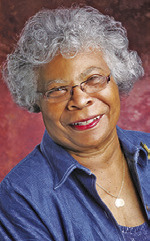
Caldwell native and graduate of Freeman School in 1957, Frankie Turner Manning has led a monumental life culminating in the University of Washington recently renaming its Center for Anti-Racism in Nursing in her honor.
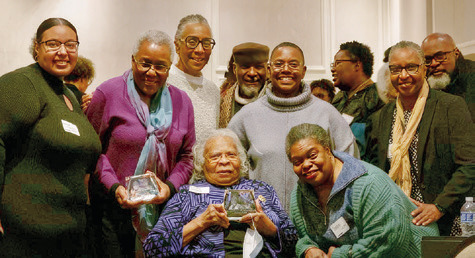
The university honored Manning and Dr. Lois Price Spratlen with the new name for the center, “Manning Price Spratlen Center for Anti-Racism & Equity in Nursing,” due to the two Black nurses fighting for equity in nursing.
The university announced the renaming in May 2023 and held an open house on Jan. 19 to celebrate the official renaming.
The Center’s Interim Director, Dr Monica McLemore, said, “She (Manning) has been vanguard in pushing the university to recognize the accomplishments of Black nurses.”
“Her work at the Veterans Administration was/is trailblazing and her value to the Seattle community (nursing and beyond),” she said.
Manning was a “key founder of the Mary Mahoney Professional Nursing Organization,” Dr. McLemore said, which was named for the first colored graduate nurse in the United States in 1879.
The mi s s i o n o f the Manning Price Spratlen Center for Anti-Racism & Equity in Nursing (MPS CARE in Nursing) is “to dismantle systemic barriers for historically marginalized and underserved populations in order that they may thrive,” according to the university’s website.
Dr. McLemore said the center is important to the university “and to the world” because “we are the first and to my knowledge only Center for Anti-Racism in Nursing in the country -- most are in Schools of Public Health, Medicine or the Humanities/Social Sciences.”
And, Manning was humbled by the honor.
When asked how did she come to be honored, she said, “I’m not sure. The faculty, student body and staff decided.”
However, after learning more about Manning’s life, I realized why the University of Washington wanted her name to adorn the center -- it’s her servant’s heart.
Manning said she learned “the basic value of people” while growing up in Caldwell.
Manning, one from a family of 10 children, attended Freeman School during the time of a “black and white world” and participated in band, glee club, debate club “and other things you would do in high school,” she said.
She said that when she attended, Freeman School was all 12 grades.
Also, with one year until her graduation, a new school was to be built, so the students were moved to the fairgrounds for classes.
And, Manning thinks fondly of Caldwell. She said she “learned so much from her little town, including the value of caring for others.”
Manning said her home was in Freeman Town, and she walked the railroad tracks to get to downtown.
She also remembered being a member of Galilee Baptist Church.
She said that the people embraced her little sister Lillian when she moved from Freeman School into Caldwell High School.
“I was moved when I saw how easy Lillian made friends there,” she said.
And, it was that “caring heart” which led her to start her nursing training in Tulsa, Oklahoma, and then began working with Veterans Affairs through the VA Hospital which her school serviced.
Manning said that having nurses train at VA Hospitals while they are in school “is a common practice across the country.”
She joined the U.S. Army Reserves and was stationed in several places across the globe.
In Des Moines, Iowa, she helped settle Cuban refugees.
In Japan, she was on a team to create a “what if a national emergency would happen” plan. She was also activated during Desert Storm and served in Saudia Arabia.
Manning later provided nursing services as a missionary in Haiti.
In 2004, she was appointed to serve as board member for a three-year term on the Washington State Board of Health.
She retired from the Army in 2000, and then later retired from the University of Washington in 2010 after having served the university since 1981.
And, it was her service to the University of Washington which was recognized recently -- having been characterized by her nursing colleagues as a strong leader, visionary nurse, mentor, coach and guide.
Dr. McLemore said, “Nursing has a unique role to play in dismantling structural racism because of our status as the largest of the health professions. We touch everyone and everything. When we nurse the nation, we can change the future and heal our world,” Manning said that she learned during her life that “people are different and cultures are quite different, but all people have value.”
And, that was Manning’s advice to anyone considering healthcare as a profession: “always remember that every patient is important.”
“Every patient is an open book.”
“This is the most noble profession in the universe.”
And, she then went back to remembering her time in Caldwell.
I would like to tell the young people in Caldwell, “Caldwell gives you a lot. Don’t look down on your little town,” Manning said.
“You can’t take away where we were born.”
“I’m proud of where I was from,” she said. There were a lot of good people. They were my foundation.”